VAD
Content may include inaccuracies, outdated information, or technical errors. Users are advised to cross-check critical information before implementation.
A value added chain shows how an organization turns inputs into a result for the customer. A sequence of processes stands at its centre. Participants, resources, application systems and indicators attach to that sequence.
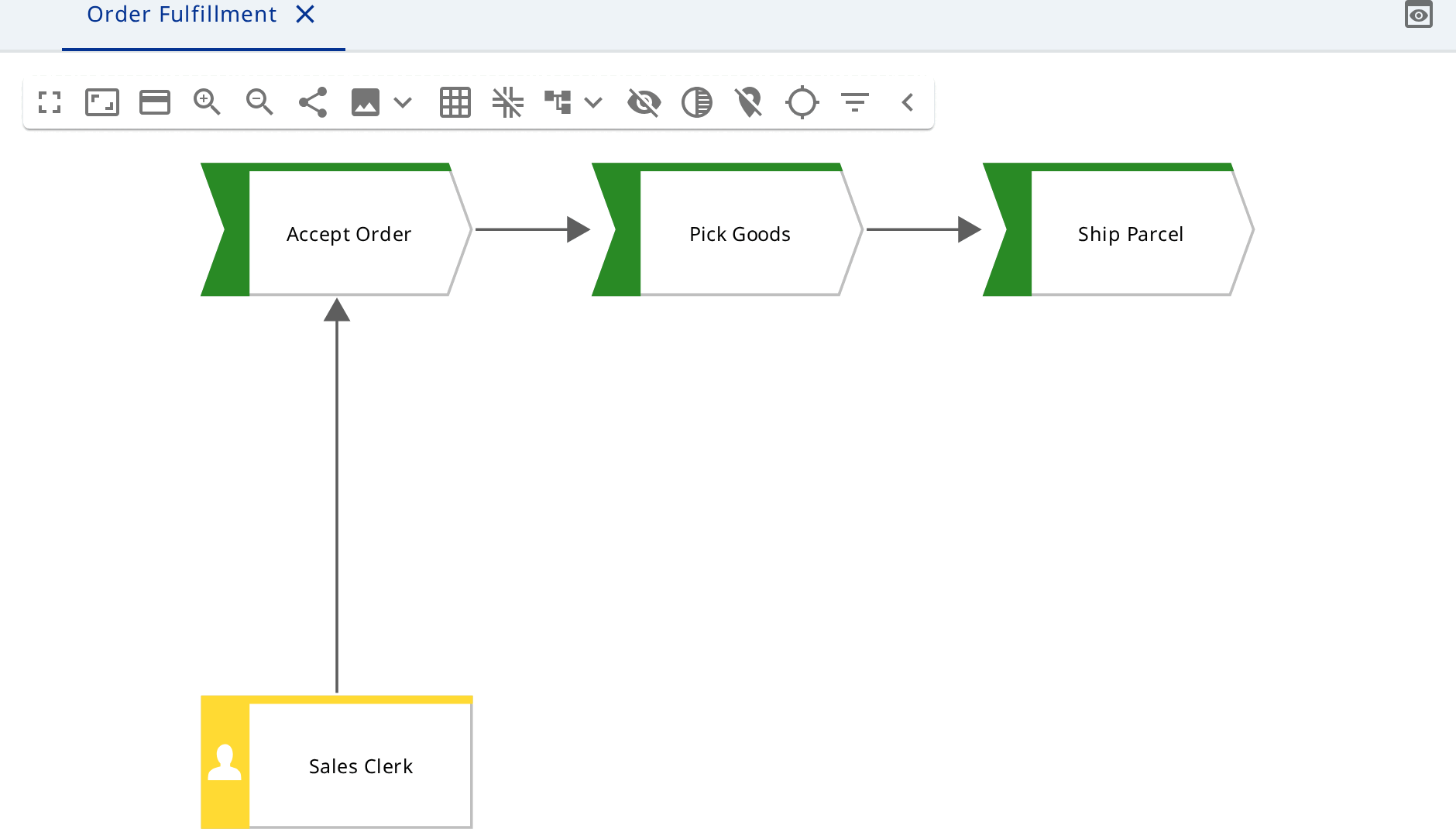
Create the model and the chain
Create a model Order Fulfillment of the type ValueAddedChain and open its
diagram.
Add four Process nodes in a row: Accept Order, Pick Goods,
Pack Parcel, Ship Parcel. Join them left to right with three Control
Flow relationships - that is the chain.
Resources and product
Add a Resource Goods in Stock and a Product Delivered Parcel.
Draw Resource Flow from Goods in Stock to Pick Goods: the process
consumes the resource. Draw a second Resource Flow from Ship Parcel to
Delivered Parcel: the process produces the product the chain ends with. A
product is a kind of resource, so it is allowed wherever a resource is.
Participants and systems
Add Participant nodes Sales Clerk and Warehouse Operator. Draw
Responsibility from the clerk to Accept Order and from the operator to
Pick Goods. Then draw Support from the clerk to Ship Parcel: on that
step the clerk helps but is not responsible for it.
Add Application System Shop Backend with an Automation relationship to
Accept Order, and Warehouse Management with an Automation relationship
to Pick Goods.
Indicators
Add an Indicator Order Lead Time with a Measurement relationship to
Ship Parcel, and Picking Errors with a Measurement relationship to
Pick Goods.
Breaking a step down
Add the processes Weigh Parcel and Print Label and draw Composition from
Pack Parcel to each. The filled diamond ends up on Pack Parcel, the
containing process.